The Dispossession of B.H.
2026
PETG, TPU, microcontrollers, cameras, sensors, motors, smartphones
This project transforms physical space into a living system through robots. Neither completely organic, machine, insectoid, or reptilian, arm-sized robots are released into a gallery, where they remain still until a human passes by them. Sensing this movement, the robots begin to crawl toward the human, while cameras embedded in their heads livestream their point of view to smartphones installed throughout the space. Drawing from anxieties surrounding the way robotics have been instrumentalized for war, surveillance, and companionship, these robots blur the boundaries between organisms as autonomous beings and agents operating within human spaces.
This project responds to the emergence of global technology that prioritizes a top-down view of the world. From the aerial gaze of drones in warfare to the satellite mapping of topographical surfaces, contemporary technologies frame our perception of the planet from a vertical distance, precluding direct interaction with the physical world. Consequently, the issues that affect our world are abstracted to a global scale that seems impossible to address. By reorienting perception back to the ground with an embodied encounter between human and machine, the work asks how new forms of connection and knowing might emerge within ecosystems that invert human-centric hierarchies.
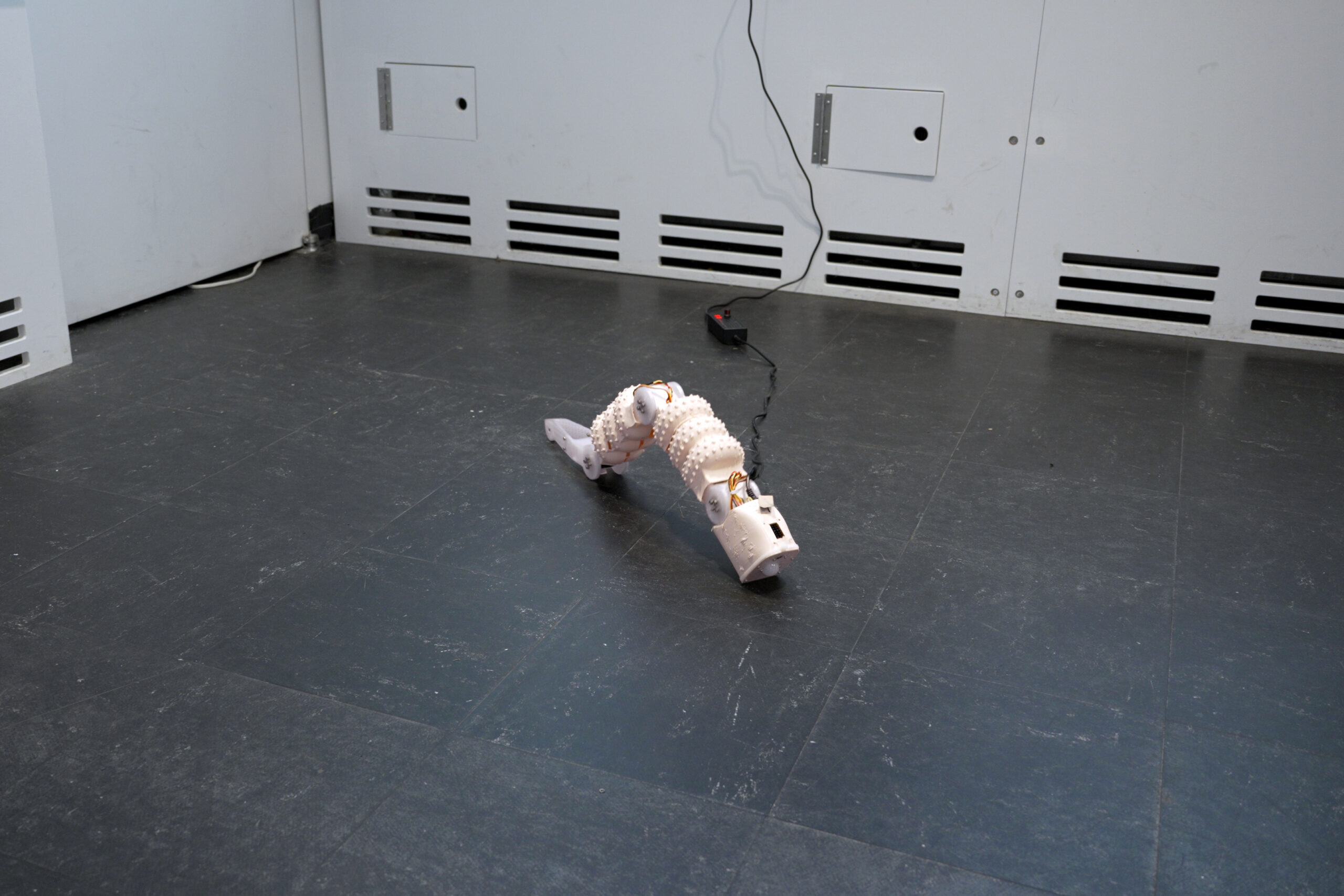
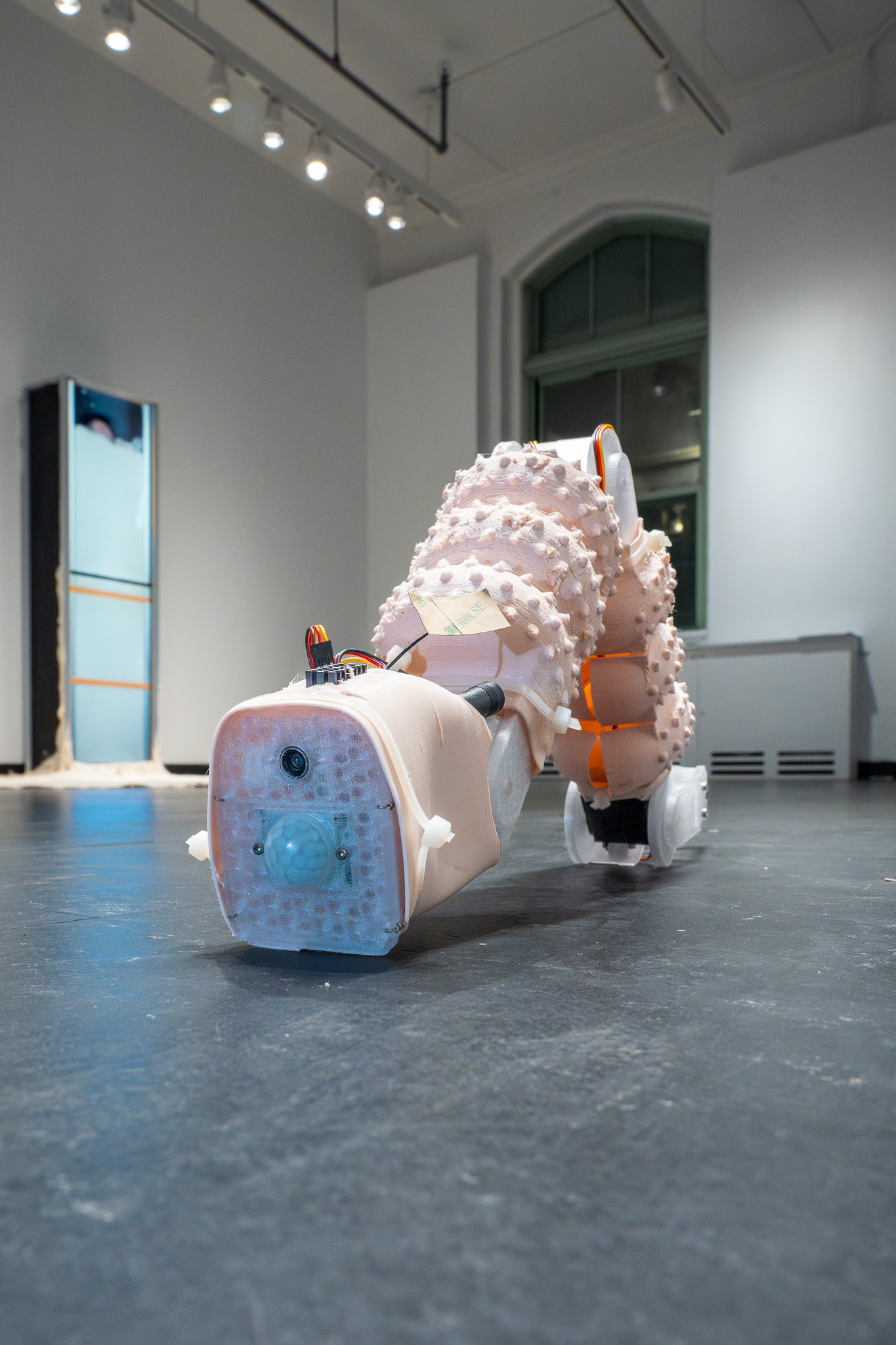
Installation view. Photo by Frank Haotian Cong.
Equipped with sensors that detect human movement and cameras that register the viewer’s presence, the robots create an ecological system in which the boundaries between human perception, machine perception, and self-awareness become increasingly unstable. Eschewing the smooth, sleek, and shiny aesthetic of space rockets, androids, and self-driving cars, the robots made for this project borrow the forms of terrestrial organisms, becoming insectoid-reptilian chimeras. When the robots detect human movement, they will begin crawling and slithering toward the viewer, as if burrowing through soil or rising from mud. Through these movements, the robots evoke a bodily rhythm that reconnects the viewer’s proprioceptive awareness to the ground.
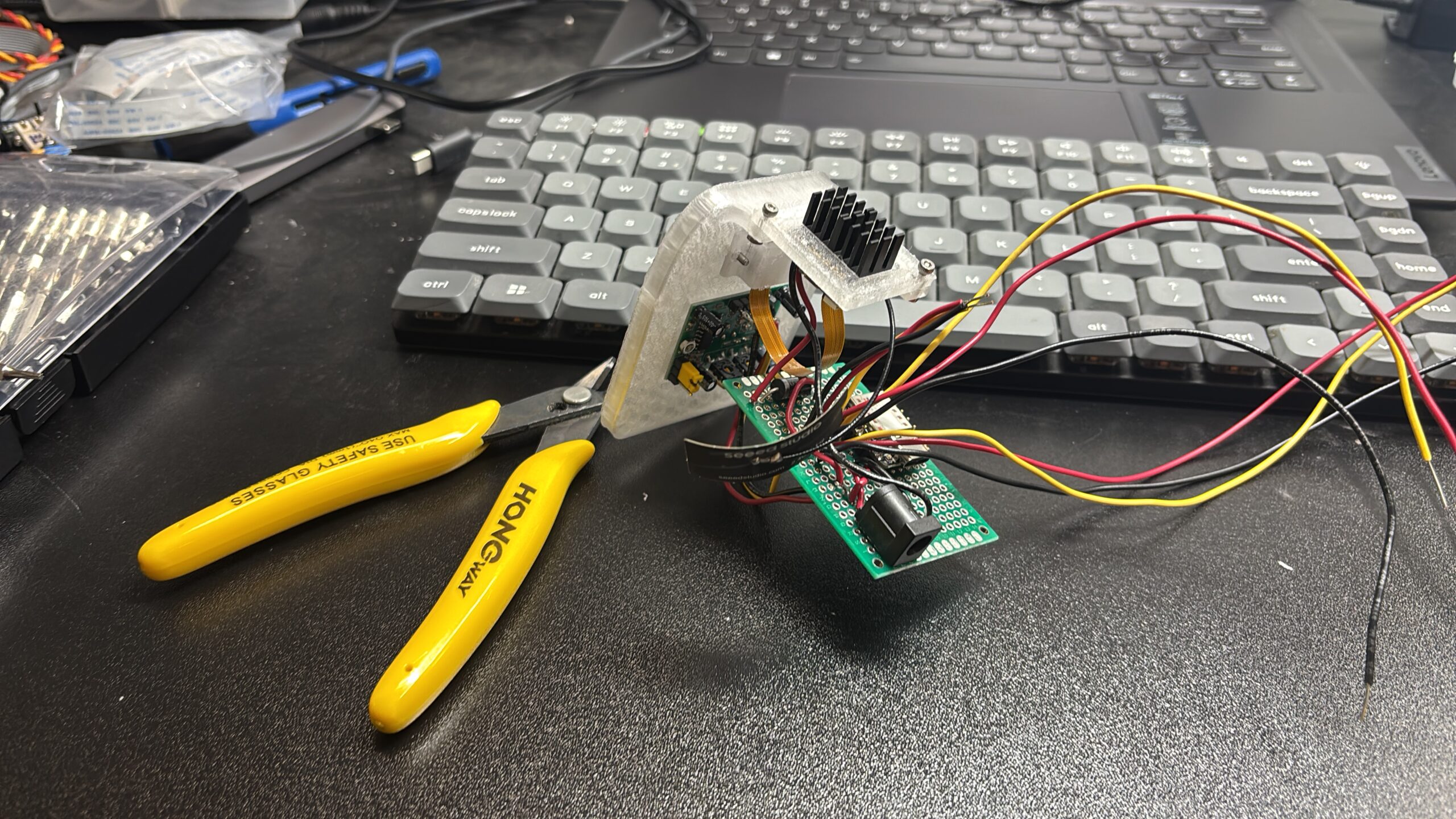
The “brain” of the robot consisting of two microcontrollers, a camera, and a PIR sensor.
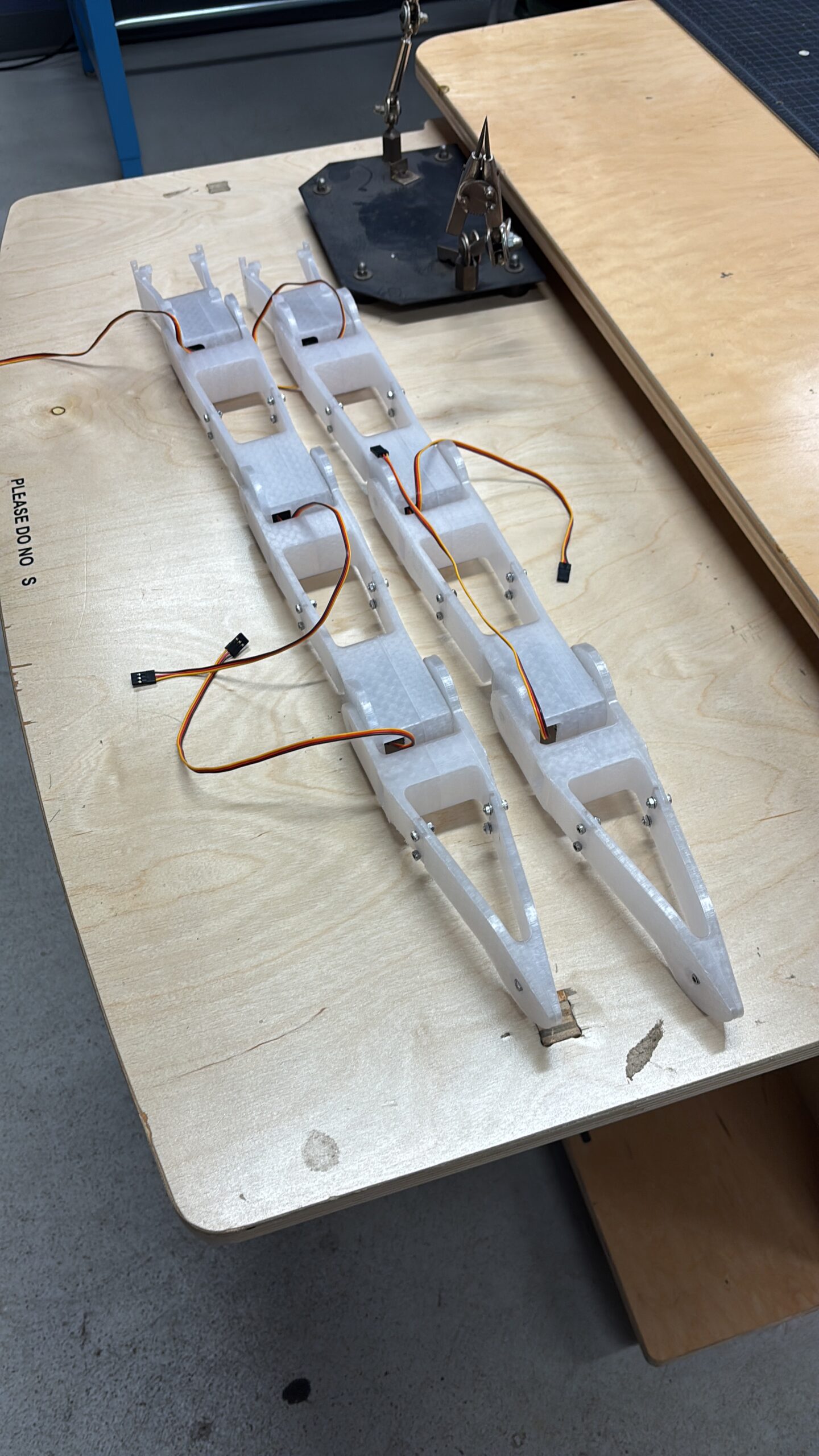
The inner armature that houses the stepper motors.
Through the screens scattered throughout the space, the viewer watches themselves being actively “hunted” by these robots. However, this action is only triggered by the viewer’s own movement, producing a shifting relationship of subject and object between the robots and the viewer. The viewer continually shifts between their own perspective and the robots’ live point of view, watching their body move through the space from an external perspective. As this relationship unfolds across phases of dormancy, activation, and response, the viewer and the robots become mutually implicated within an ecosystem in which neither occupies a stable position of autonomy and agency. Instead, their entanglement reveals the tensions, negotiations, and dependencies that emerge through attempts at coexistence.
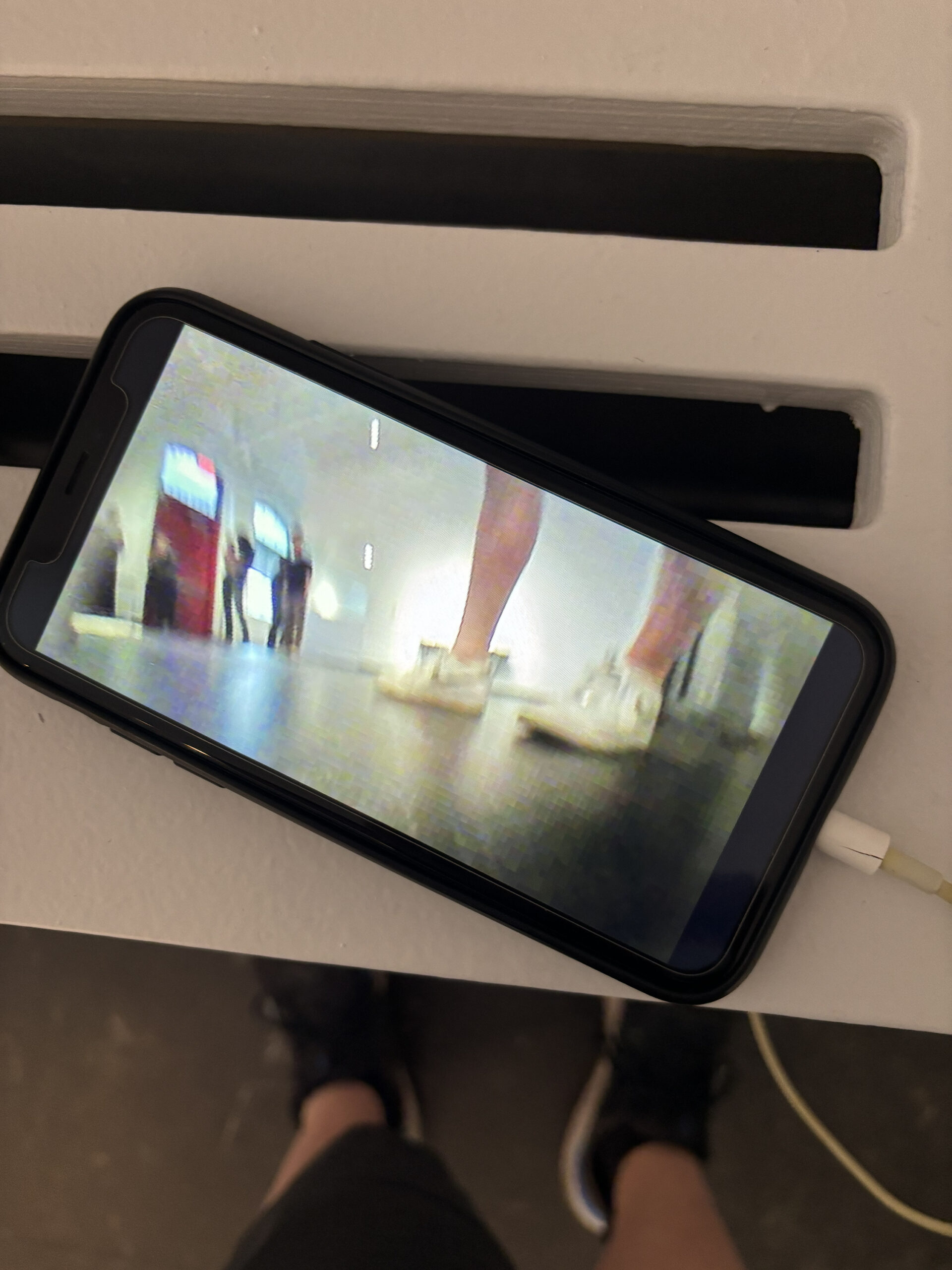
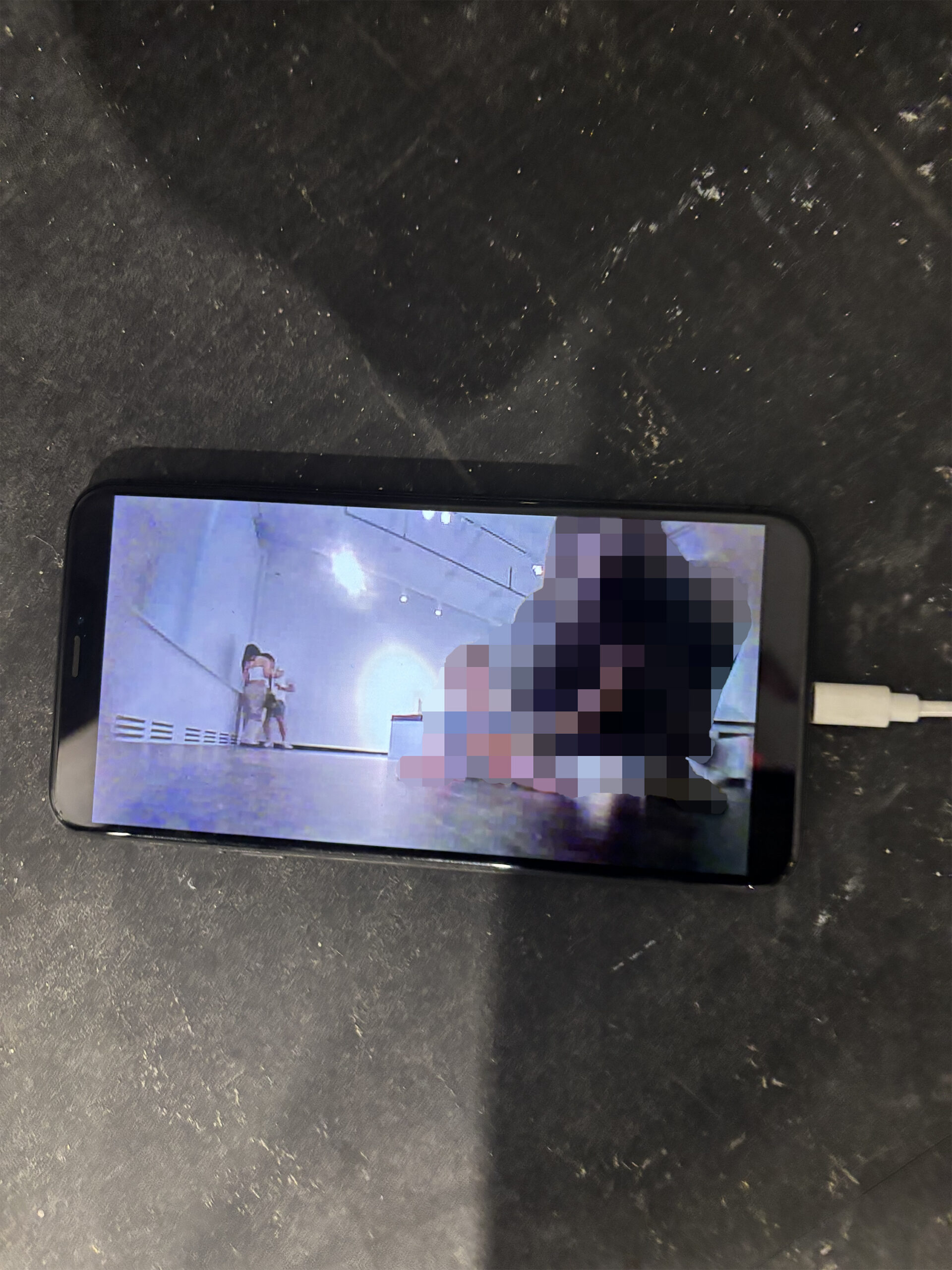
individual faces have been blurred to protect identity of exhibition viewers